The Roma is Ferrari's elegant daily GT, and it services closer to a modern turbo Ferrari than to a classic. It leans heavily on electronics and driver-assist systems, so the shop needs current software and comfort with the tech, not just mechanical skill.
What the Roma is and where it fits
The Ferrari Roma is a front-engine, rear-wheel-drive grand touring coupe introduced for the 2020 model year. Ferrari positioned it as the entry point into the current lineup, aimed at buyers who want a less track-focused, more daily-usable Ferrari. It shares its twin-turbocharged V8 architecture with the Portofino convertible, tuned for the coupe application with its own chassis calibration.
The Roma is deliberately understated in its design compared to other current Ferraris. The visual language is cleaner and less aggressive, and the driving experience is more settled and comfortable in everyday situations. That character makes it popular with owners who want Ferrari quality without the drama of a mid-engine configuration, and who may use the car more frequently than a specialist track tool.
What separates a real Roma specialist
The Roma's drivetrain is well-established Ferrari V8 territory, but the car's electronics and driver assistance systems are among the most advanced Ferrari has offered in this segment. DEIS diagnostic access is essential. The front radar systems, the adaptive suspension, and the chassis electronics all require software-level diagnosis when faults appear. A shop working without it is guessing.
A specialist familiar with the Portofino platform and the SF90's electronics architecture is well-placed to service the Roma. The car is newer than the 488 and F8, which means fewer independents have built deep platform-specific experience at this point. When evaluating shops, ask how many Romas they currently service and whether their technicians have had specific training on this generation.
Common issues and what to watch for
As a relatively new model, the Roma's failure patterns are still emerging in the specialist community. The twin-turbo V8 is a known quantity from the Portofino, and the chain drive eliminates the belt service interval that defines older Ferraris. The eight-speed DCT requires fluid attention on the same cycle as other current Ferraris using this transmission.
Some owners have noted sensitivity in the electronic power steering response in certain drive mode configurations. Many ride quality concerns are addressed through calibration updates rather than parts replacement, which makes access to Ferrari's diagnostic and software update system particularly important for resolving these issues cleanly rather than chasing them mechanically.
Service intervals and what owners overlook
The Roma follows Ferrari's standard annual service cadence. Oil and filter changes, brake fluid replacement on a time interval, and spark plugs at the specified mileage are the core recurring services. The turbo system should be inspected at each major service for any sign of seal degradation or wastegate wear, even on a car with relatively low mileage.
The eight-speed DCT is perhaps the most commonly deferred service on this car. Owners accustomed to conventional automatics sometimes overlook the fact that Ferrari's dual-clutch uses a wet clutch pack that degrades with old fluid. Periodic fluid replacement is good practice on any DCT-equipped Ferrari, even if the service book doesn't list a short interval.
Buying a Ferrari Roma: what a pre-purchase inspection covers
A Roma PPI should include a full DEIS scan, verification of all driver assistance and safety systems, a review of DCT condition, and inspection of the turbo system. Given the car's electronics-heavy architecture, stored codes that have been cleared by a seller are a concern. The DEIS history can sometimes reveal prior faults that have since been cleared at a dealer.
Service history completeness is particularly important on a car this new. Most Romas on the used market carry relatively low mileage, which makes any service gap more suspicious. A car with gaps in its first two or three years of service life should prompt direct questions about how it was stored and whether any warranty claims or unresolved issues were involved.
Independent specialist versus the dealer
For a car as new as the Roma, the Ferrari dealer or authorized service center is the appropriate choice for warranty work and for software updates that require factory authorization. Ferrari issues calibration updates that meaningfully improve the car's behavior, and these require dealer access. Keeping the car current on software is more than routine maintenance for a car this electronics-dependent.
Outside of warranty, independent specialists with current DEIS access and proven experience with the Portofino platform are well-placed to service this car. The drivetrain and platform fundamentals are not unique to the Roma. As more Romas leave warranty coverage, the independent specialist market for this car will develop. For now, verify specific Roma experience, not just general Ferrari capability.
What to check on a Ferrari Roma
- Current Ferrari software and electronics diagnostics
Common questions
Is the Roma practical as a daily driver?
It's one of Ferrari's most usable cars, with a real 2+ cabin and GT manners, but it still wants a marque specialist for service.
Is the Ferrari Roma a practical everyday car?
More so than most Ferraris. The front-engine layout provides a more conventional ride and usability profile, and Ferrari designed it for owners who want refinement alongside performance. It still requires attentive maintenance and specialist service, but for a Ferrari it sits toward the comfortable and usable end of the range.
Does the Roma have a cam belt?
No. The twin-turbo V8 in the Roma is chain-driven. There is no belt replacement interval, which removes the largest and most expensive scheduled service event that defines older mid-engine Ferrari ownership.
How does the Roma compare to the 488 or F8 Tributo?
The Roma is a front-engine GT, the 488 and F8 are mid-engine sports cars. The Roma is more comfortable and better suited to regular use. Performance is strong but the character is deliberately different: more refined, less intense. Buyers choosing between them are often choosing between two different use cases.
What should I check when buying a used Roma?
Full service history from the first year onward, a DEIS diagnostic scan covering all systems including driver assistance modules, DCT fluid condition, and confirmation that software is current. Given the car's age, any service gap deserves a clear explanation from the seller.
Find a Ferrari specialist
Ferrari Roma owners use Ferrari specialists for service, PPI, and restoration.
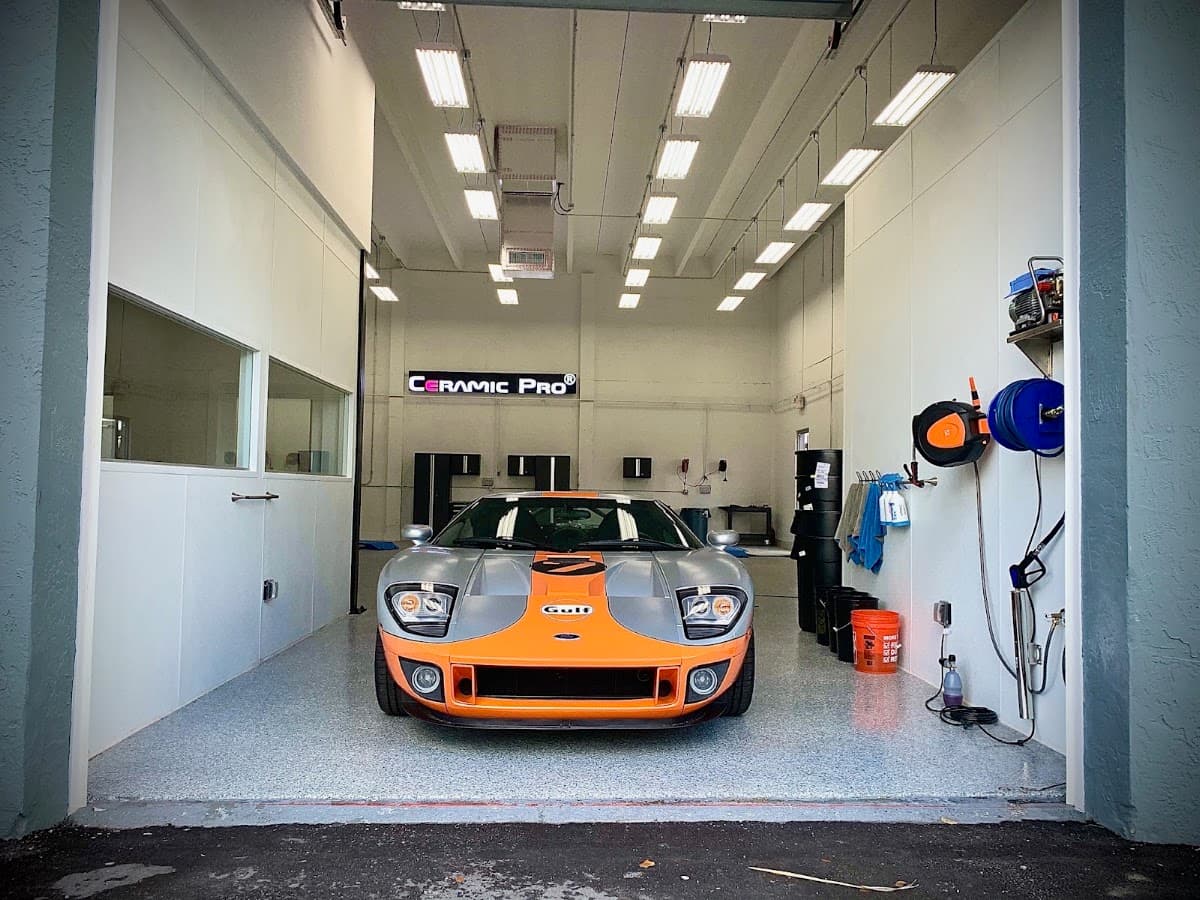
Detail Boutique
Miami
exotic & classic paint protection in Miami
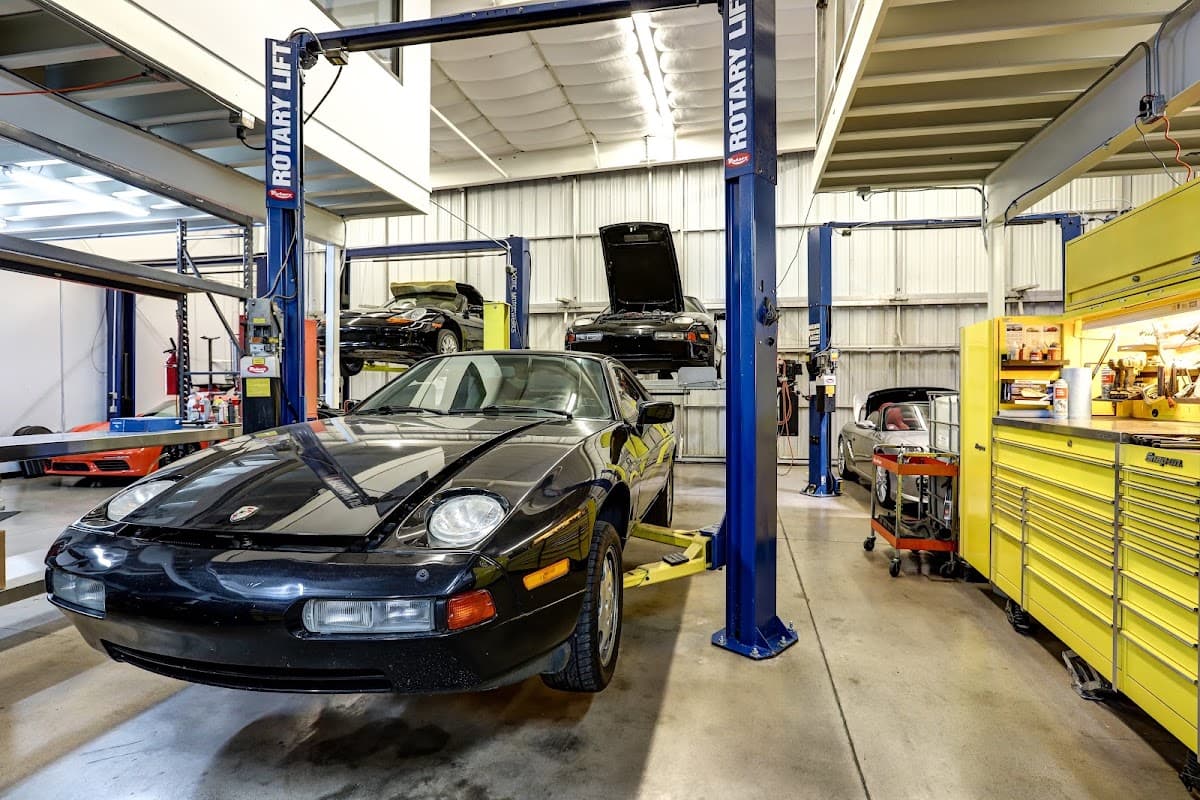
Exotic Motorwerks
Thunderbird Industrial Airpark
exotic & classic service in Scottsdale
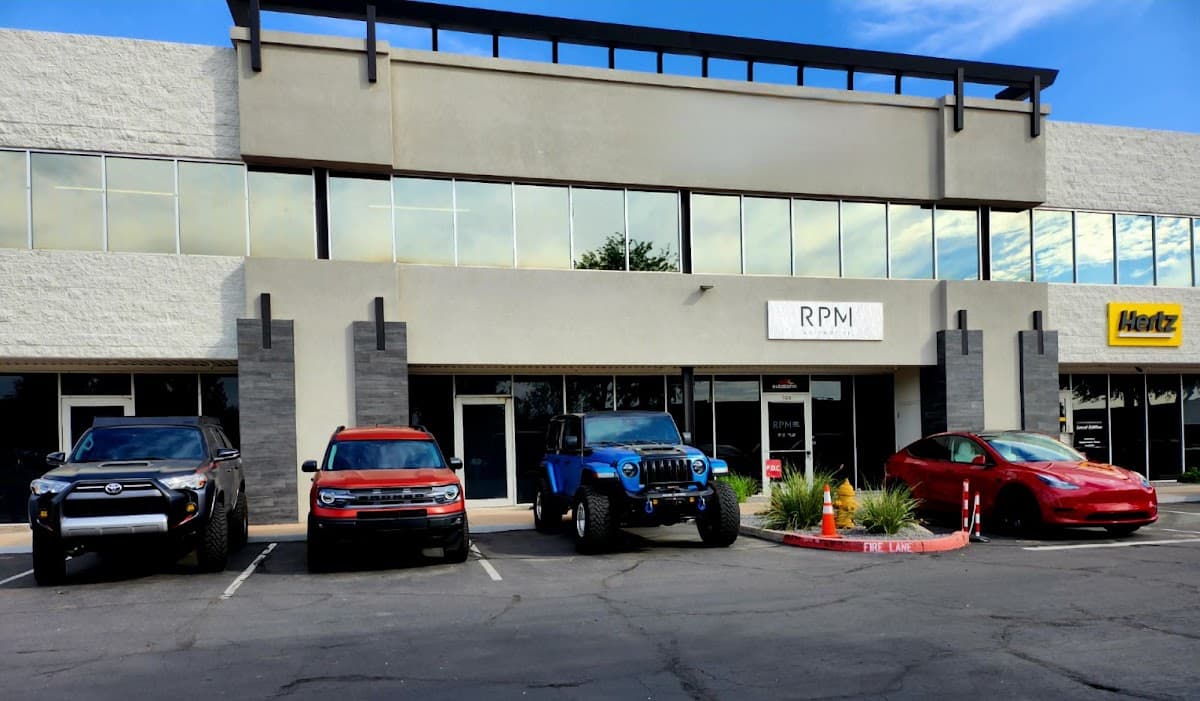
RPM Auto Styling
Scottspark Business Center
exotic & classic paint protection in Scottsdale